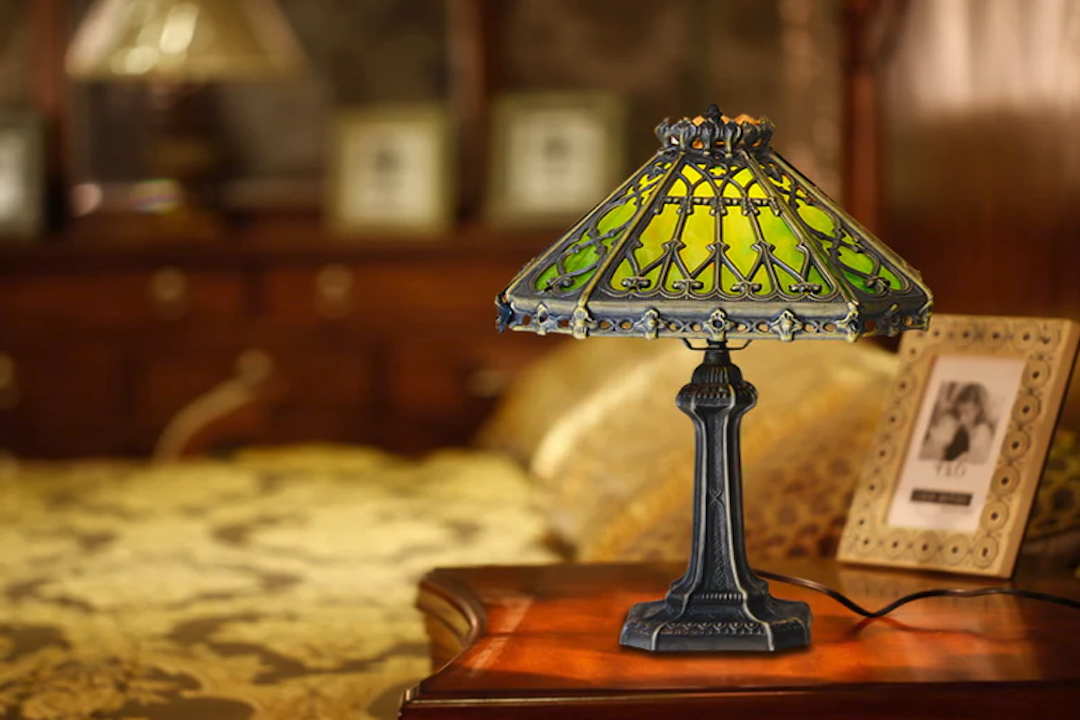
Vintage Tiffany Stained Glass Table Lamp: Perfect for Study Room Ambiance
The Tiffany lamp, a hallmark of Art Nouveau design, represents a significant development in decorative arts. These lamps are renowned for their stained glass shades, crafted using a copper foil technique patented by Louis Comfort Tiffany’s workshop. A vintage Tiffany stained glass table lamp, particularly one designed for a study, combines aesthetic appeal with functional illumination, offering a nuanced case study in early 20th-century design principles and craftsmanship.
The origin of Tiffany lamps Martliving traces back to the late 19th century. Louis Comfort Tiffany, son of Tiffany & Co. founder Charles Lewis Tiffany, initially pursued a career in painting. His fascination with glass led him to establish his own glassmaking studio in 1885. This studio, Tiffany Glass Company, later evolved into Tiffany Studios.
Development of the Copper Foil Technique
Prior to Tiffany’s innovations, stained glass windows were typically assembled with lead came, a method suitable for large architectural applications but less so for intricate, three-dimensional objects. Tiffany’s artisans developed and refined the “copper foil” method. This technique involved wrapping each cut piece of glass with thin copper foil, then soldering the foil edges together. This allowed for greater detail, more complex curves, and the creation of self-supporting lampshades. The resulting solder lines, often patinated to a dark bronze or black, became an integral part of the design, outlining the individual glass pieces.
Influence of Art Nouveau
Tiffany lamps are intrinsically linked to the Art Nouveau movement (roughly 1890-1910). This style, characterized by its organic, curvilinear forms, naturalistic motifs, and rejection of industrial mass production, found a perfect medium in Tiffany’s glasswork. The lamps often depicted botanical themes—flowers, leaves, dragonflies—rendered in vibrant, opalescent, and sometimes dichroic glass. This emphasis on nature, coupled with skilled craftsmanship, positioned Tiffany lamps as high-end decorative objects.
Characteristics of a Vintage Tiffany Lamp
Identifying a genuine vintage Tiffany lamp involves recognizing specific material, construction, and aesthetic attributes. The authenticity of these pieces significantly impacts their value and historical importance.
Glass Selection and Color Palette
The glass used in Tiffany lamps was not uniformly manufactured. Tiffany Studios produced its own glass, incorporating various textures, opacities, and colors. This included “Drapery Glass” (with natural folds), “Fractured Glass” (with internal cracks), and “Favrile Glass” (iridescent glass with a lustrous sheen). The color palettes often reflected natural settings, with greens, blues, browns, and amber tones predominating, meticulously chosen to create specific visual effects when illuminated. The interplay of light through these varied glass types is a primary aesthetic feature.
Construction and Craftsmanship
Beyond the copper foil technique, the construction of a Tiffany lamp involved careful attention to detail. The metalwork of the base, typically bronze, was often cast and hand-patinated. Designs on the bases frequently mirrored or complemented the patterns on the shade. The wiring and sockets, while subject to replacement over decades of use, were originally chosen for their durability and integration with the lamp’s overall design. The weight and solidity of a genuine Tiffany lamp are palpable, reflecting the quality of materials and construction.
Signature and Markings
Genuine Tiffany lamps often bear specific markings. These can include a signature on the shade (e.g., “Tiffany Studios New York”) or on the base (e.g., “TIFFANY STUDIOS NEW YORK” with a model number). However, the absence of a mark does not definitively indicate forgery, nor does the presence of a mark guarantee authenticity, as forgeries exist. It is essential to consult with experts for authentication.
Design for the Study Environment
A Tiffany table lamp in a study serves both as a light source and a decorative focal point. Its design attributes contribute to an atmosphere conducive to work and contemplation.
Functional Illumination Specifics
For a study, a lamp’s primary role is to provide adequate and appropriate lighting for reading, writing, and other intellectual tasks. Tiffany lamps, with their opaque or semi-opaque shades, typically direct light downwards and outwards, casting a warm, diffused glow. This type of illumination minimizes glare on desk surfaces and screens, reducing eye strain. The colored glass further influences the quality of light, imparting a distinct ambiance that can set a particular mood. Unlike modern, highly directional task lamps, a Tiffany lamp spreads light more broadly within its immediate vicinity.
Aesthetic Integration within a Study
A vintage Tiffany lamp introduces historical gravitas and artistic flair to a study. Its Art Nouveau aesthetic—characterised by organic forms and natural motifs—can complement both traditional and some contemporary interior designs. The lamp acts as a sculptural element even when unlit, its intricate glasswork and bronze base providing visual interest. When illuminated, it becomes a focal point, drawing the eye and enriching the room’s color palette. Its presence can elevate the perceived “age” and character of a space, much like a well-bound book on a shelf suggesting a history of thought.
Typologies of Study-Appropriate Lamps
While many Tiffany lamp designs exist, certain styles are particularly suited for study environments. “Desk lamps” or “library lamps” were explicit designations in Tiffany Studios’ catalogs. These often featured dome-shaped shades that provided broader light dispersion, or specific “reader’s” lamps with adjustable arms. Geometric patterns, often less ornate than floral designs, were also common, offering a more austere aesthetic that might be preferred in a work-oriented space. Examples include lamps with mosaic patterns, or those featuring abstract glass arrangements.
Acquisition and Care of Vintage Tiffany Lamps
Acquiring a vintage Tiffany lamp requires research and discernment. Once acquired, proper care is essential to preserve its condition and value.
Sourcing and Authentication
Purchasing a vintage Tiffany lamp typically involves specialized auctions, reputable antique dealers, or private sales. Due diligence is paramount. As mentioned, authentication by experts is advisable. Examine the construction closely: the quality of the solder lines, the type of glass, the patina on the bronze base, and any existing markings. Be wary of “Tiffany-style” lamps, which are contemporary reproductions inspired by the aesthetic but not constructed by Tiffany Studios. Price is often an indicator; genuine Tiffany lamps command substantial sums.
Maintenance and Restoration
Given their age, vintage Tiffany lamps may require maintenance. The electrical components (wiring, sockets) are often the first to need attention, as original materials may have degraded. It is crucial to use a qualified restorer for electrical work to ensure safety and preserve the lamp’s integrity. Cleaning the glass shade requires gentle methods, typically a soft cloth and mild soap and water, avoiding abrasive cleaners that could damage the patina or glass surface. The bronze base can be dusted and occasionally treated with a non-abrasive bronze cleaner, sparingly applied. Major structural repairs, such as re-soldering glass pieces, should only be undertaken by specialists.
Environmental Considerations
The lamp’s placement in a study should consider environmental factors. Direct sunlight, for instance, can cause the patina on the bronze to fade prematurely and, in rare cases, affect the glass over very long periods. Extreme temperature fluctuations and high humidity should also be avoided, as these can stress the materials and contribute to degradation. A stable indoor environment helps maintain the lamp’s condition. Position the lamp where it is less likely to be bumped or knocked over, safeguarding it from accidental damage.
The Enduring Appeal of Tiffany Lamps
The persistent demand for Tiffany lamps, particularly vintage examples, speaks to their status as enduring objects of beauty and craftsmanship. They transcend mere utility, offering a connection to a specific period of artistic innovation.
Artistic and Cultural Significance
Tiffany lamps are more than lighting fixtures; they are works of art. Their inclusion in museum collections worldwide underscores their cultural significance. They represent a pivotal moment in American decorative arts, showcasing an innovative approach to glassmaking and a dedication to handicraft at the cusp of industrialization. Each lamp is a testament to the vision of Louis Comfort Tiffany and the skill of his artisans, a tangible piece of Art Nouveau’s legacy.
Investment Value
For collectors, vintage Tiffany lamps can represent a significant investment. Their value often appreciates over time, particularly for rare or well-preserved examples. Factors influencing value include: authenticity, condition (especially the original glass and base), the rarity of the design, and provenance. As with any antique, market trends fluctuate, but the foundational artistic merit of Tiffany lamps provides a stable long-term value. Acquiring one is often seen as not just purchasing an object, but inheriting a piece of history and artistry.
A Legacy of Light
A vintage Tiffany stained glass table lamp in a study transforms the space. It is not merely a light source; it is a conversation piece, a historical artifact, and a source of inspiration. It casts a light that is both literal and metaphorical, illuminating texts and minds, while also illuminating the enduring power of human creativity. It serves as a static yet dynamic sentinel, much like an ancient oak tree in a garden, silently presiding over intellectual pursuits and offering a consistent aesthetic anchor in a world of flux. Its warm glow creates an inviting sanctuary, encouraging focus and thoughtful engagement with one’s surroundings and endeavors.